How AI Is Changing the Way You Find Legal Help—Without Replacing Lawyers
3/6/2025
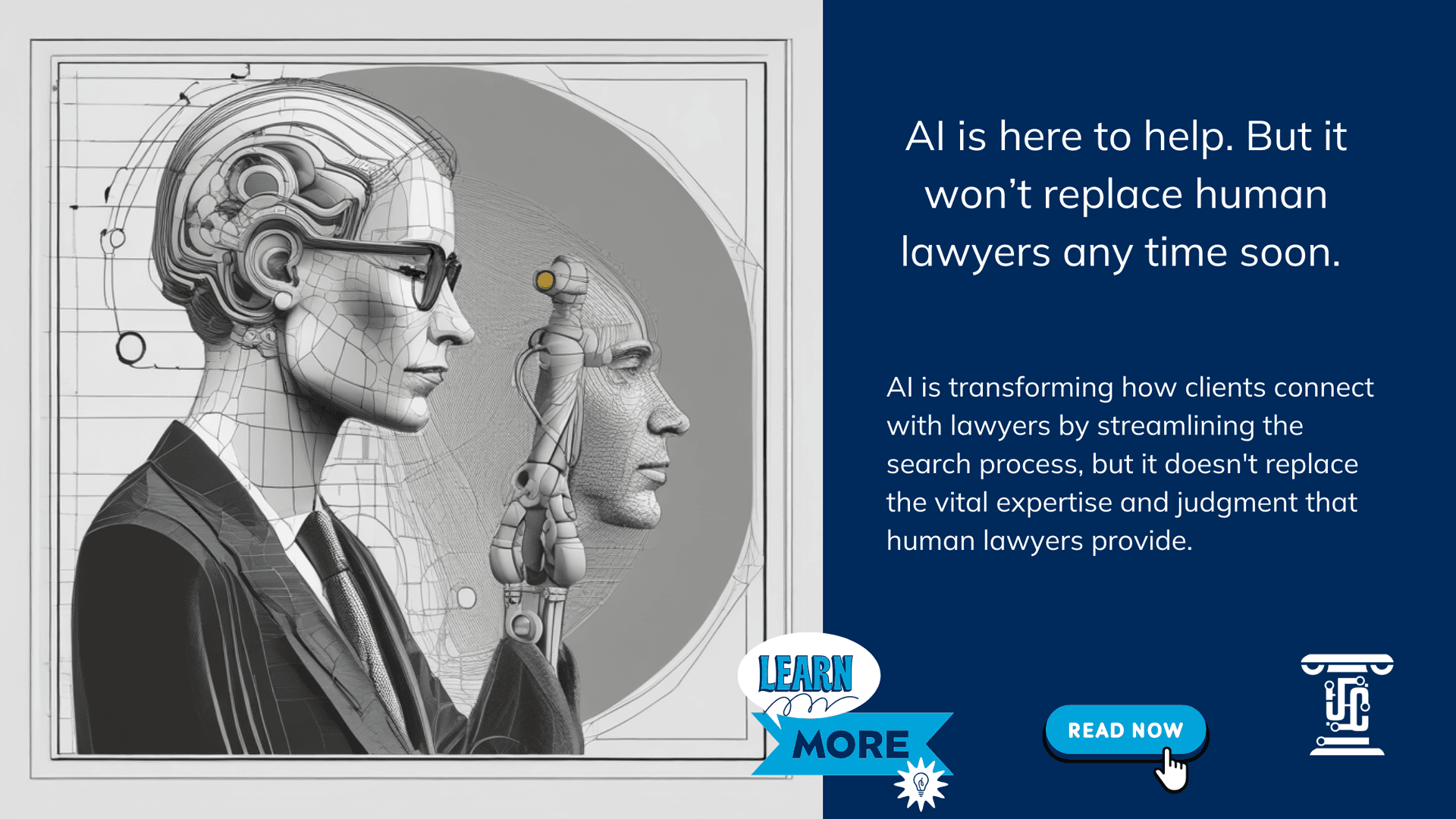
AI is transforming how clients connect with lawyers by streamlining the search process, but it doesn't replace the vital expertise and judgment that human lawyers provide.
Artificial intelligence is transforming industries, and the legal profession is no exception. However, while AI is making it easier to connect clients with the right lawyers, it is not a substitute for legal expertise. Many consumers are understandably wary of AI in legal services—fearing that technology might replace human judgment or lead to unreliable legal advice. Lawyers, too, may be concerned about the role AI will play in their profession. The reality is that AI is best used as a tool to enhance access to legal professionals, not replace them.
AI Cannot—and Should Not—Replace Lawyers
While AI can analyze data, identify patterns, and streamline administrative tasks, it cannot provide the nuanced legal judgment, advocacy, and ethical considerations that human attorneys offer. Legal matters require expertise, critical thinking, and an understanding of the unique circumstances surrounding each case—elements that AI simply cannot replicate. Relying on AI-generated contracts or legal advice can lead to costly mistakes, as these tools do not fully grasp the complexities of individual legal situations.
The Challenge of Finding the Right Lawyer
For many individuals and businesses, securing the right legal representation has traditionally been a difficult and time-consuming process. Searching online or relying on word-of-mouth recommendations often leads to uncertainty about whether an attorney is truly the best fit. The inefficiency of this process can cause delays, misalignment of expectations, or hiring a lawyer who lacks the necessary experience.
AI as a Smart Search Tool—Not a Legal Advisor
Rather than replacing lawyers, AI-powered platforms like Juricon enhance the way clients find qualified legal representation. Unlike generic search engines or paid directories, AI-driven matchmaking systems analyze a client’s specific needs and connect them with attorneys who have the right experience. These tools do not generate legal advice but rather ensure that individuals are connected to the right professionals who can provide expert counsel.
By considering factors such as jurisdiction, case complexity, and attorney specialization, AI search tools reduce uncertainty and improve the efficiency of the attorney-client matching process. This means clients are not left guessing whether a lawyer is the right fit—they are matched with one who has a proven track record in their area of need.
AI in the Broader Legal Industry
Beyond client-lawyer connections, AI is also enhancing legal practice in other ways. Law firms are increasingly using AI for document automation, contract analysis, and legal research. These innovations help lawyers work more efficiently, allowing them to focus on high-value tasks such as case strategy, negotiations, and advocacy. However, no AI tool can replace the skills of an experienced attorney, nor should clients ever rely on AI-generated legal documents without professional oversight.
The Future of AI in Legal Services
As AI continues to evolve, its role in the legal profession will be one of support—not replacement. AI can help streamline processes, but the essence of legal practice will always rely on the expertise of attorneys who provide sound judgment, strategic thinking, and personalized legal counsel. Clients should view AI as a resource that makes it easier to find the right lawyer, not as a substitute for legal representation.
For those seeking legal assistance, AI-powered platforms like Juricon offer a smarter way to connect with experienced attorneys. By eliminating guesswork and enhancing the matchmaking process, AI is making legal help more accessible—while ensuring that the human expertise at the core of the legal profession remains irreplaceable.